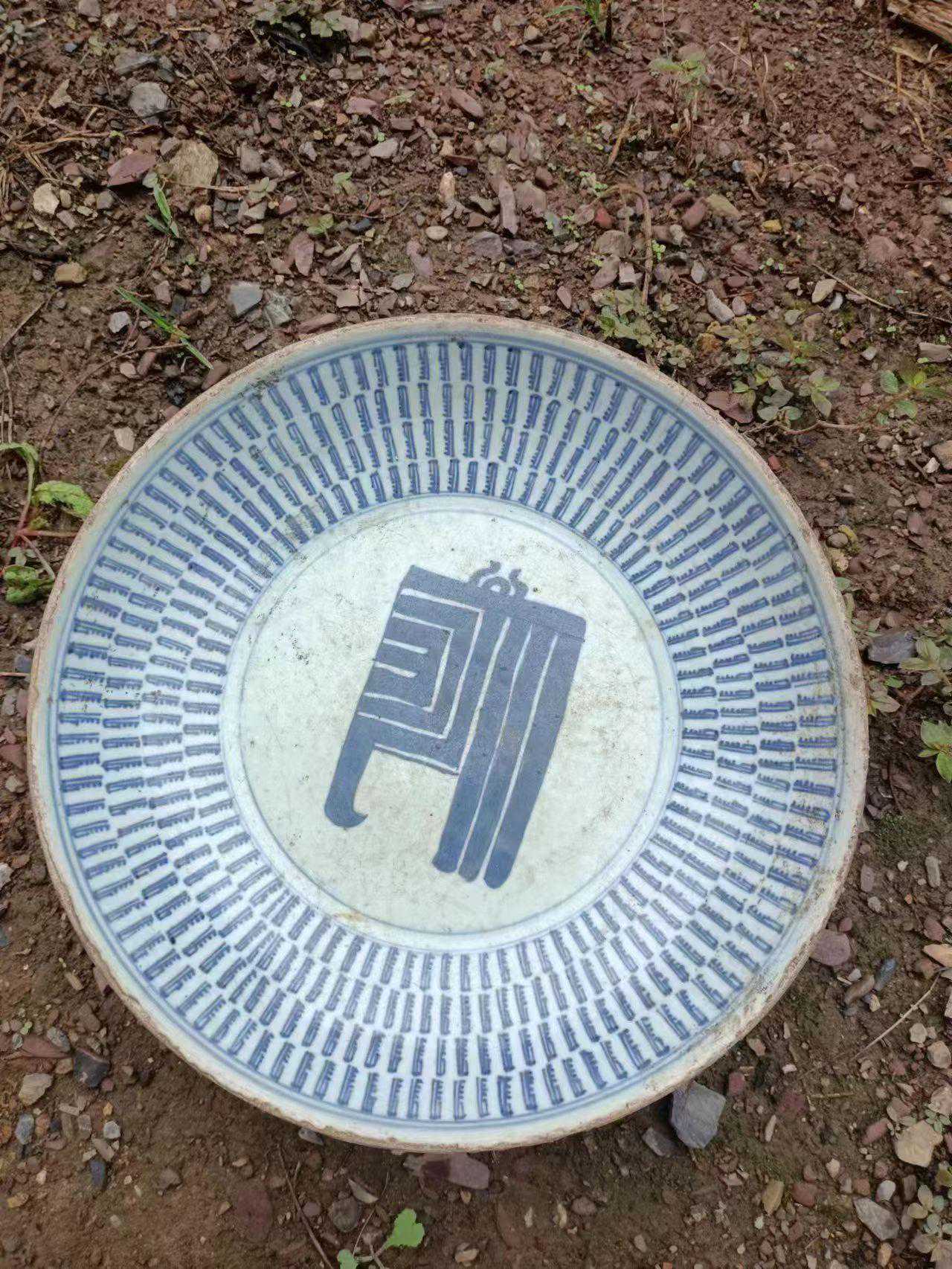
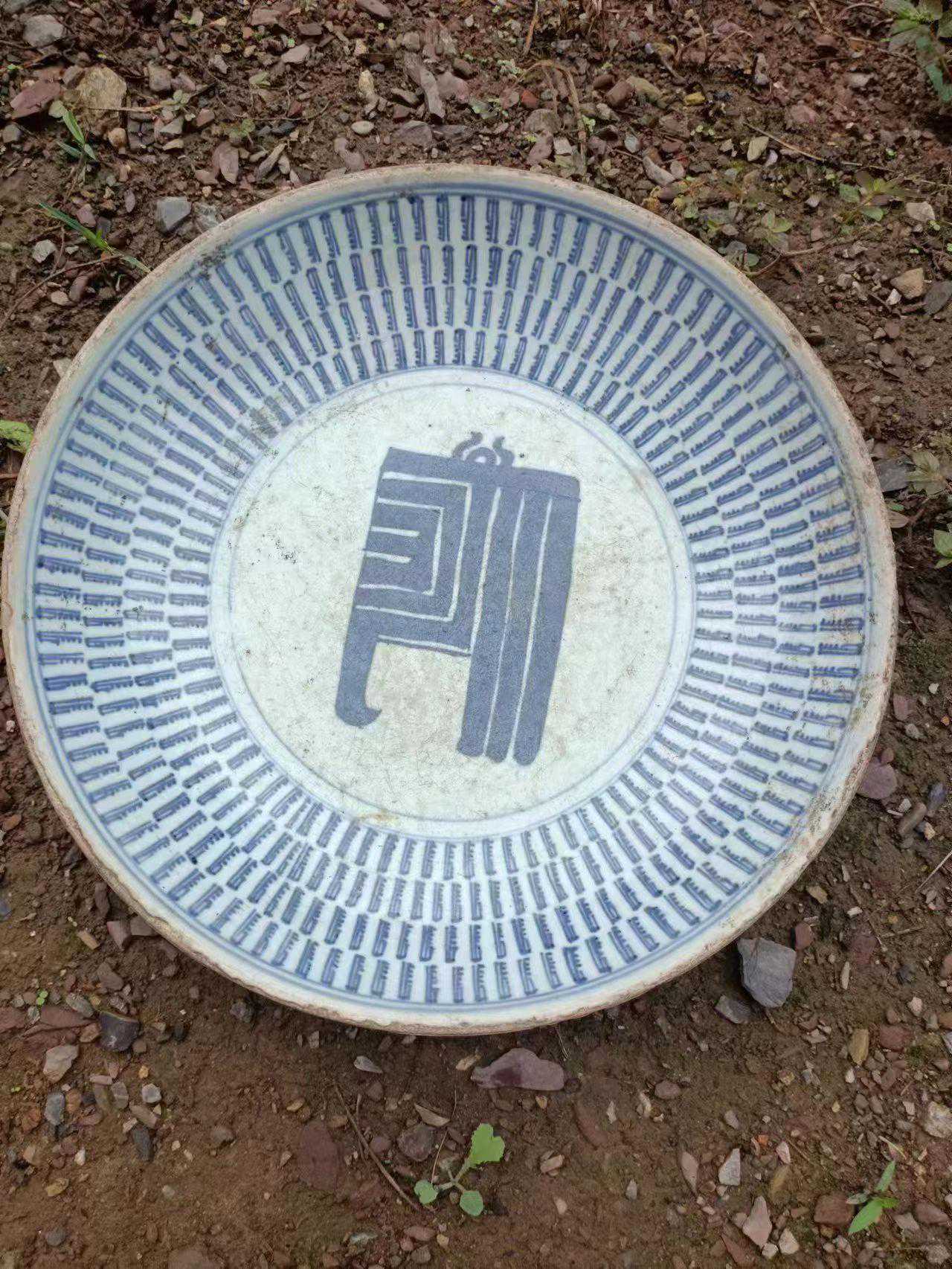
瓷盘上的变体梵文,人们忘记了它的本源,于是后来就把乾隆青花梵文盘称为“寿字盘”。社会上时兴把这种盘子作庆寿的一种贺礼,传续很长时间。
ThevariantSanskritontheporcelainplate,peopleforgetitsorigin,solatertheycalledtheQianlongblueandwhiteSanskritplate"longevitycharacterplate".Itispopularinthesocietytousethiskindofplateasakindofcongratulatorygiftforcelebratinglife,whichlastsforalongtime.
有专家认为,这类常见的青花瓷器,从清朝早期开始,一直到晚清都有生产。乾隆青花梵文大盘,盘内一周,绘有整齐排列的几百个如出一辙的图案,像画像字又都不像。那么,它们到底是什么?其实,它们是梵文的简化,那些梵文无非是佛经或咒语。
Someexpertsbelievethatthiskindofcommonblueandwhite,aweekinsidetheplate,therearehundredsofneatlyarrangedlikethesamepattern,,whatarethey?Infact,
曾有人1997年在北京官园附近平安大街工地拣到一块明瓷残片,明万历官窑青花梵文碗标本。这是梵文,它是六字真言:“唵、嘛、呢、叭、咪、吽”的一部分。底部尚存“制”字和“万”字的左下角,底款应当是“大明万历年制”六字款。这件残瓷片,可以佐证乾隆青花梵文“寿字盘”的梵文大意。
In1997,someonepickedupapieceofMingporcelainfragment(Figure5)attheconstructionsiteofPing'anAvenueneartheofficialgardenofBeijing,wh'sapartofthesixcharactermantra:"Zhe,Ma,Ni,Ba,MI,Hong".Atthebottom,therearestill"system"and"Wan""WanlisystemofMingDynasty".ThisremnantporcelainpiececanprovetheSanskritgeneralideaoftheblueandwhiteSanskrit"ShouZipan"ofQianlong.
古代民窑与官窑的性质全然不同,民窑追求的是利润,工匠为了保持生产效率,不可能像官窑那样一丝不苟地摹写一笔一画,事实上民间也几乎没人能识得梵文。直至今日亦然。所以梵文的写法就逐渐演变,日趋简化、划一,以致草率。
Thena,craftsmencan',,theSanskritwritingmethodgraduallyevolved,becomingmoresimplified,unifiedandevenhasty.
但是万变不离其宗,这些难以辨识的图案,其实就是变体梵文。只不过人们忘了它的本源。于是后来就把乾隆青花梵文盘称为“寿字盘”。
Butitcan'',theblueandwhiteSanskritplateofQianlongwascalled"longevityplate".
自此,人们就只识寿字,不知梵文了。寿字盘内的图案与其说是变体梵文,不如说是寿字的简化。这种盘子常被用作祝寿的贺礼。于是一种本来由外来纹样作装饰的瓷器变成了纯粹的中国风格。有趣的是,这是一个不同文化间与官、民之间,符号的交流、融合、变异乃至误读的活生生的例子。
Sincethen,peoplehaveonlyknownthecharacteroflongevity,,akindofporcelaino,thisisalivingexampleoftheexchange,fusion,variationandevenmisreadingofsymbolsbetweifferentcultures,officialsandpeople.
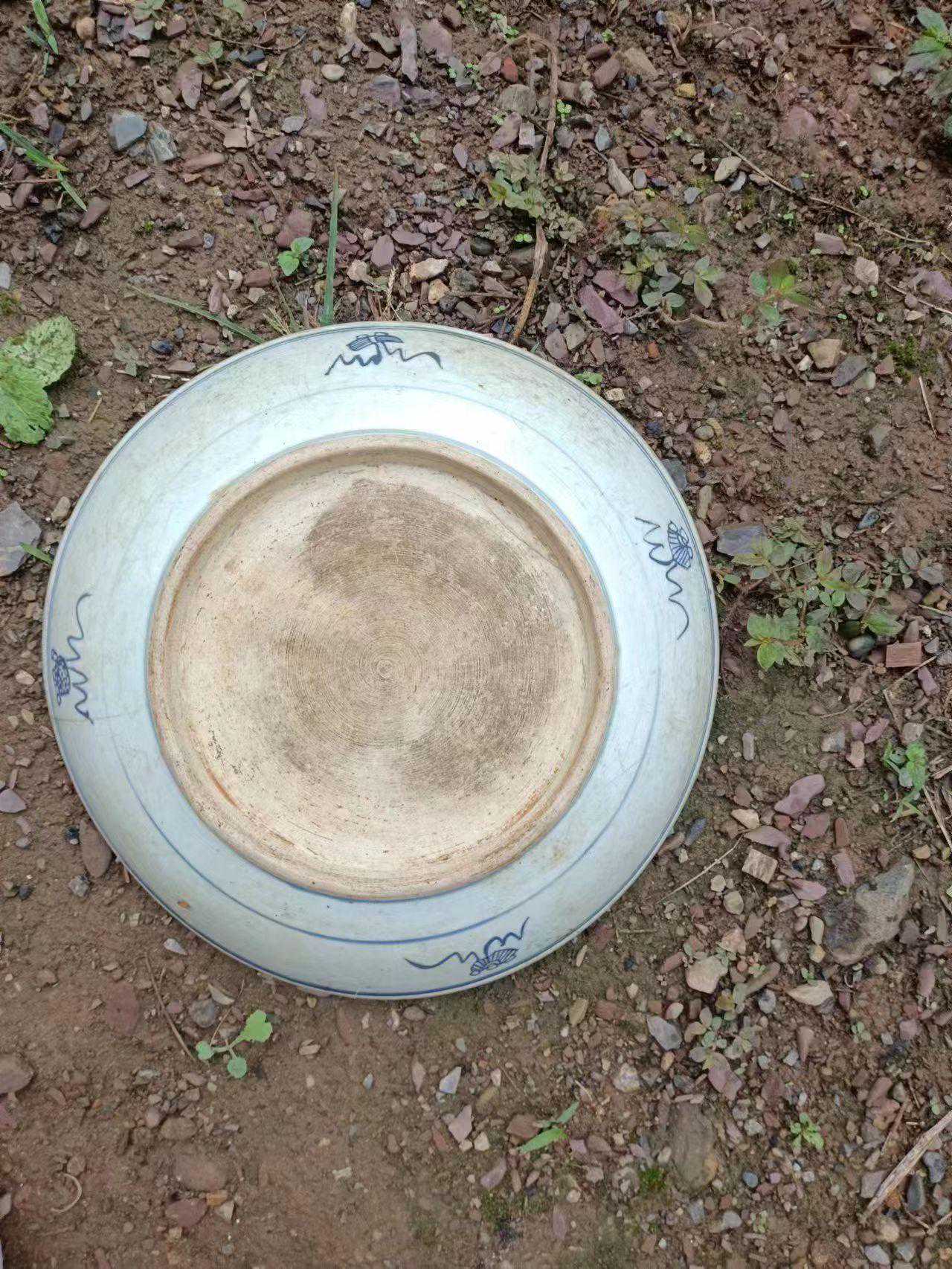
图中藏品为近日嘉玉宝阁征集到的一组藏品,该藏品一组两件,保存完好,色泽亮丽,能保存这么完好实在是难得一见。

-
 2025-01-13
 -
 2025-02-19
 -
 2025-01-20
 -
2024-11-19
-
收藏备用!假日近郊游,选项+1~
2025-05-10 -
让文物活起来——闵行博物馆举行玉石器展
2025-01-12 -
大彬直言:方丈对于辛巴的仇恨,是敢怒不敢言,他得活着
2025-03-28 -
2019年特别推荐书画名家:姚小尧
2024-11-11